
The National Highway Traffic Safety Administration (NHTSA) estimates that over 20% of all motor vehicle accidents are brake-related. While premature mechanical failures do occur, most incidents are due to inadequate brake maintenance. In fact, the NHTSA and many car accident lawyers estimate that worn brake pads are the primary cause of most rear-end collisions and vehicular accidents involving pedestrians and cyclists.
Worn Brake Pads and Loss of Vehicular Control
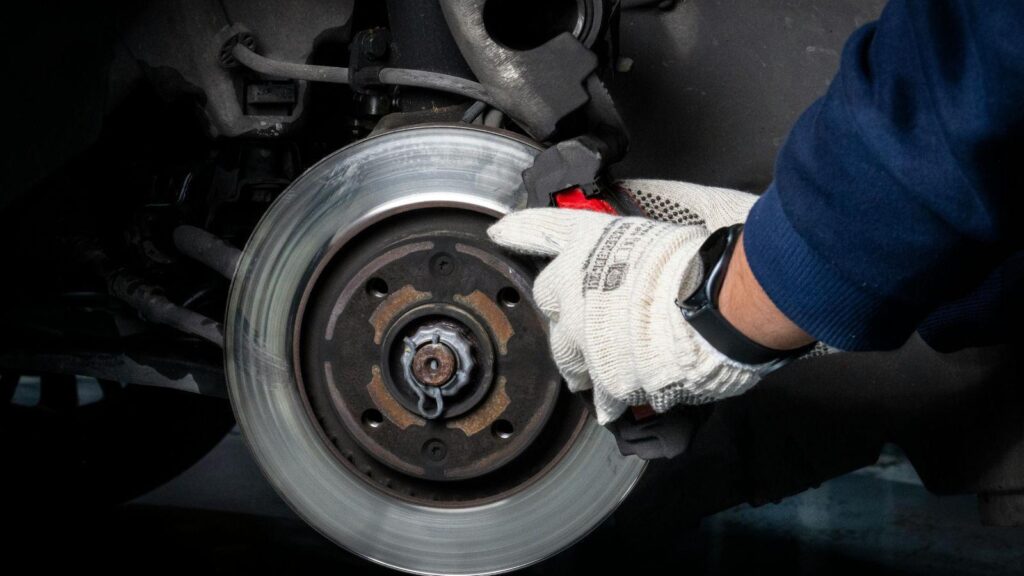
When you step on your brake pedal, the vehicle transmits that force to your brakes via fluid. It gets transmitted to a caliper, which is a hydraulic clamp that houses pistons and brake pads. The pads close around the brake rotor, a metal disc attached directly to the wheel. That creates fiction, which causes the vehicle to decelerate. Brake pads are designed to fail over time. This process involves intense heat and friction. Well-functioning pads absorb much of that wear, thereby protecting the rotors, calipers, and other brake components.
As your brake pads wear down beyond a suitable thickness, the uncontained forces will manifest in vehicle behaviors that may cause you to lose control. Excessive vibrations are often among the earliest indications of worn brake pads and uneven rotor wear. Initially, you’ll notice the entire vehicle shaking when you step on the brake pedal, and the shaking will intensify over time. Eventually, the steering wheel will shake, making the vehicle far more difficult to control, and higher speeds will greatly exacerbate that loss of control.
Excessive brake wear rarely occurs evenly over the pads and other components. Pads that are more worn on one side than the other will cause the vehicle to pull to that side. This can be quite noticeable even when braking at low speeds, such as pulling up to a stop sign. It can cause drivers to veer into potholes, roadside obstacles, and even pedestrians. At high speeds, the vehicle pulling to a side can cause a disastrous loss of control, especially in inclement weather.
Inconsistent braking can also have a dramatic effect on your vehicle’s tires, as it causes faster tire wear and uneven tread patterns. Tires that wear unevenly create inconsistent traction across a vehicle, making steering, cornering, and emergency maneuvers less predictable. Rain will exacerbate these traction issues, and you’ll be more prone to hydroplaning. An unevenly worn tire is also at much greater risk of a blowout due to structural weaknesses.
The greatest concern with worn brake pads is longer stopping distances. A longer stopping distance results in less time for a driver to make the right decision and act accordingly. Early on in the brake wear, the hydraulic system can compensate, such as in a single emergency stop. That said, even light wear can lead to brake fade during rapid braking or over long braking distances. When a brake pad reaches about 3 to 4 millimeters, they no longer provide the necessary thermal barrier. This is the danger zone because the brake fluid can boil, at which point you can experience a drastic reduction in how long you have to stop your vehicle.
Damage to Your Vehicle Beyond Your Brake Pads
While brake pads are a consumable and relatively inexpensive component, the damage that can occur often extends well beyond the pad itself. As mentioned, it leads to the deformation and faster wear of your tires, and that creates excessive wear on your vehicle’s suspension.
Once the pad is gone, the metal backing plate of the caliper grinds directly against the rotor. This metal-on-metal grinding creates deep grooves and scoring. It can warp and eventually crack the rotors, and it will cause the calipers to become misshapen with time as well. That results in overextension of the pistons, which may cause sticking or warping. It can also lead to tearing of the rubber seals, which is the primary cause of major brake fluid leaks.
A caliper that seizes up can cause full loss of braking power on that particular wheel. Once your brake fluid boils, that causes systemic failure as well. You may notice the pedal going soft and taking time to recover. Eventually, you’ll experience temporary and then total brake failure.
Gradual Decline and Increased Costs
Wear to a vehicle’s braking system occurs in very small increments over time. If you adhere to the maintenance schedule found in your vehicle’s owner manual, it’s highly unlikely that you’ll experience any of the control loss or damage discussed earlier. It’s also important to have a mechanic check your brakes at the earliest signs of a problem.
Drivers who delay brake service often spend significantly more money in the end. Consider that replacing your pads and performing other basic brake maintenance will generally cost several hundred dollars or less. If you wait until you hear grinding, you could be looking at a bill upward of $1,000. More widespread failure of your vehicle’s braking system could result in a repair bill upward of $2,500.
According to car accident lawyers, the other vital consideration is that you have a legal obligation or “duty of care.” As a registered driver and vehicle owner, you’re responsible for maintaining your vehicle’s critical safety systems. When your brakes fail, the initial legal assumption is that you failed to meet that duty, which is the legal definition of negligence. This is why nearly all accidents caused by brake failures are treated as cases of negligence. An accident could result in points on your license, a bigger insurance premium, and even out-of-pocket expenses. If someone was seriously injured due to the accident, you could be looking at even more grave ramifications. If you were in a crash that may have been caused by another driver’s worn brakes, contact an experienced team of injury attorneys.